
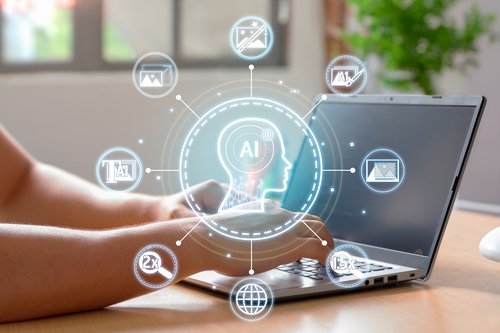
Understanding AI and Its Capabilities
Artificial Intelligence (AI) is a broad field of computer science dedicated to creating systems capable of performing tasks that would normally require human intelligence. AI encompasses various capabilities, such as machine learning, natural language processing, and robotics, each designed to simulate human-like functions.
Machine learning, a subset of AI, involves algorithms that enable computers to learn from data and improve their performance over time without being explicitly programmed. This technology is increasingly applied in sectors such as finance, healthcare, and marketing, where it enhances decision-making processes and operational efficiency. For example, in healthcare, machine learning can analyze vast datasets to identify trends and predict patient outcomes, which can lead to improved treatments and better care.
Natural language processing (NLP) is another critical capability of AI, allowing machines to understand and interpret human language. NLP is utilized in various applications, including chatbots, virtual assistants, and translation services. The advancements in NLP have significantly improved user interaction with technology, making it more intuitive and accessible. This interaction is critical as businesses leverage NLP-driven tools to provide enhanced customer service and streamline communication.
Robotics, closely linked with AI technology, involves the design and deployment of robots capable of performing tasks typically executed by humans. Industrial robots, for instance, are increasingly employed in manufacturing lines for tasks such as assembly and quality control, improving efficiency and output. The sector is ever-evolving, with developments in AI enabling robots to adapt to new environments and complete more complex tasks.
Currently, the state of AI development is remarkable, with significant advancements resulting in a wide array of applications across industries—from autonomous vehicles to personalized marketing strategies. These capabilities not only enhance existing processes but also give rise to new opportunities for innovation and productivity.
The Effects of AI on Employment Trends
The advent of artificial intelligence (AI) has brought about significant transformations in employment trends across various sectors. As businesses integrate AI technologies into their operations, there is an observable shift in labor demand, where certain roles become obsolete while new positions emerge. According to the World Economic Forum, it is anticipated that 85 million jobs may be displaced by AI and automation by 2025, particularly in roles characterized by repetitive tasks. Sectors such as manufacturing, customer service, and administrative support are foreseen as the most susceptible to job losses as AI continues to evolve.
However, it is essential to recognize that alongside the potential for job displacement, AI is also responsible for the creation of new roles that require advanced skills and adaptability. Emerging fields such as data analysis, AI system management, and machine learning operations present opportunities for employment growth. As organizations seek to harness the full potential of AI technologies, they require talented professionals equipped to manage, implement, and innovate these systems. A report from McKinsey highlights that by 2030, 12 million jobs could be generated in the United States alone, driven by the need for human expertise to complement AI capabilities.
The anticipated outcome of AI’s influence on labor markets reflects a dual narrative—while many existing jobs may be replaced, the demand for new competencies and skills is expected to grow. This evolution will likely lead to the resizing and redefining of job categories rather than a straightforward loss of employment opportunities. It is critical for the workforce to adapt to these changes, embracing lifelong learning and reskilling to thrive in an AI-driven economy. Therefore, organizations and educational institutions must work together to prepare the workforce for this rapidly changing employment landscape.
Reskilling and Upskilling for the Future Workforce
The rapid advancement of artificial intelligence (AI) technology is significantly reshaping the labor market. As many industries adapt to this shift, the importance of reskilling and upskilling the workforce becomes increasingly evident. For individuals, acquiring new skills is essential to remain relevant in a job market that is continually evolving due to AI.
Organizations must implement effective training programs that focus on both technical skills and soft skills. While technical aptitude is critical in understanding AI and its applications, soft skills such as critical thinking, creativity, and emotional intelligence become indispensable as machines take over routine tasks. Continuous learning has emerged as a cornerstone of workforce development, enabling employees to enhance their competencies in response to AI-driven changes.
Moreover, collaborations between educational institutions and businesses can play a vital role in developing tailored training curricula that meet current and future industry demands. Partnerships with universities and vocational schools can foster a pipeline of skilled labor ready to tackle the challenges posed by AI. Furthermore, companies can offer employees opportunities for professional development through workshops, seminars, and online courses, allowing them to adapt without going back to traditional schooling.
In addition to structured training programs, fostering a culture of lifelong learning within organizations encourages employees to take initiative in their personal development. This proactive approach toward skill enhancement not only benefits individual career trajectories but also boosts organizational resilience in an AI-influenced economy. By prioritizing reskilling and upskilling initiatives, companies can mitigate potential job displacement risks, ensuring a smooth transition into the new job landscape shaped by AI technologies.
Preparing for a Collaborative Future between Humans and AI
The evolution of artificial intelligence (AI) has sparked discussions about its implications on the workforce. As organizations begin to embrace AI technologies, it is crucial to envision a future where humans and AI coexist productively. This harmonious relationship, often referred to as Human-AI collaboration, emphasizes the importance of complementing human skills with AI capabilities, thus creating a more efficient workplace.
One of the primary advantages of integrating AI into various sectors is its ability to enhance human productivity. By automating repetitive tasks, AI frees up valuable time and resources, allowing employees to focus on more complex and creative endeavors. For instance, AI-driven analytics can provide insights that humans may not detect, leading to improved decision-making processes across multiple business areas. This synergistic collaboration has the potential to elevate overall performance and innovation.
However, the introduction of AI in the workplace does come with ethical challenges that must be carefully navigated. Ensuring that technology development aligns with human values is essential to fostering a positive relationship between workers and AI systems. Employers must take proactive measures to implement transparency, fairness, and accountability in their AI solutions. This includes addressing concerns about job displacement and recognizing that AI should be used to assist, not replace, the human workforce.
Businesses can cultivate a supportive environment for Human-AI collaboration by investing in training programs that equip employees with the skills to work alongside AI systems. Encouraging a culture of continuous learning ensures that workers are not just passive recipients of technology but active contributors. By prioritizing ethical considerations and focusing on skills development, companies can create a workplace where humans and AI thrive together, paving the way for a more sustainable and inclusive future of work.